
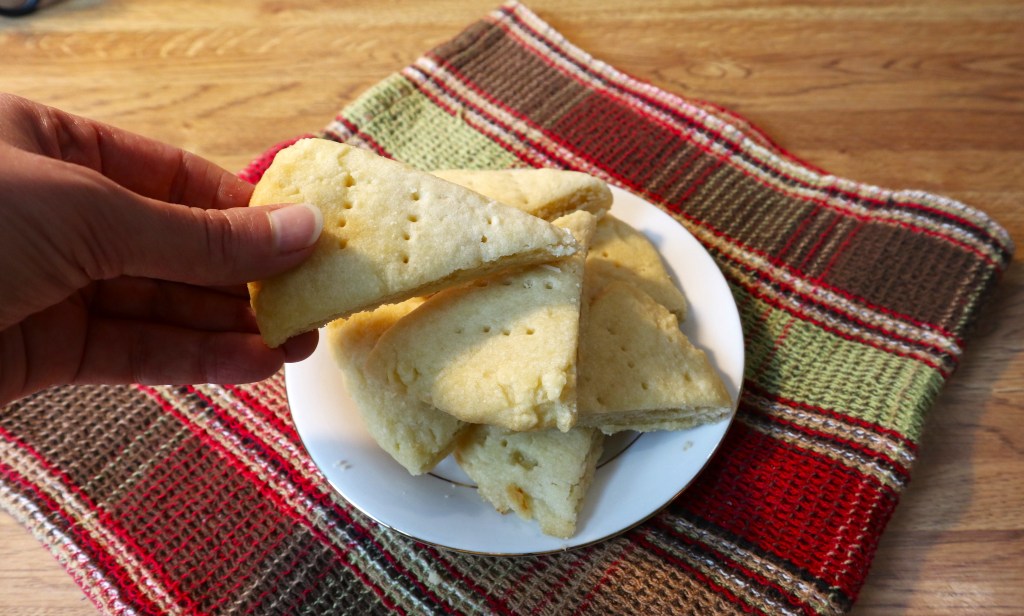
This simple recipe for Scottish Shortbread is not only easy but versatile. It is simple and delightful, especially with a cup of coffee or tea in the morning or afternoon. I love how the use of just 3 or 4 ingredients turns into a tasty treat that the Scottish have enjoyed since the 12th Century. Originally, it was made from leftover bread dough that was enriched with butter and sugar to create a delicate, tasty treat. By the 16th century, it had evolved into the butter-rich, crumbly form that we recognize today, and it is popularly credited to Mary, Queen of Scots, who is said to have refined it at Linlithgow Palace using pure butter and sugar. While there is little concrete evidence that links her directly to its invention, she is strongly associated with popularizing a refined version, especially the triangular “petticoat tails”.
The earliest printed recipe for shortbread dates to 1736, from a Scotswoman named Mrs McLintock, and for centuries, it was a luxury item reserved for special occasions such as Christmas, Hogmanay, and weddings. Shortbread or Shortie is a traditional Scottish biscuit usually made from one part white sugar, two parts butter, and three to four parts plain wheat flour. Shortbread does not contain leavening, such as baking powder or baking soda, therefore making it a tender, crisp, delicate cookie. It amazes me how such a simple treat survived this long and still graces the tables of many people all across Scotland and the world. It is truly a treat to enjoy any day of the week.
So, today I am going to share the basic traditional recipe, and you can add other spices and herbs that you like.
Let’s get started.
INGREDIENTS:
1 Cup (226 g) Butter, softened
½ Cup (60 g) powdered sugar ( or white granulated sugar * see note*)
2 Cups (250 g) All-purpose flour
1/4 Tsp. Fine salt (optional)
DIRECTIONS:
- In a medium-sized bowl, cream butter and powdered sugar until smooth. If you are adding salt, you can add the salt in this step.
- Add the flour and mix just until a dough forms. The dough will be slightly crumbly, but it will form a soft dough ball.
- Press the dough into an 8-inch round or square pan that has been lined with parchment paper or a Silpat. You can shape this into whatever shape you want. It can be a square, circle, or just pressed into the shape of the pan you are using.
- Now, at this point, what I like to do is to score the dough into either triangles or squares. Prick the dough all over with a fork. I find it easier to cut later before it fully cools.
- Chill 20–30 minutes.
- Bake at 325°F for 30–35 minutes until very lightly golden around the edges.
- Remove from the oven and place the sheet pan or tray on a wire rack. Cut the same scored edges while warm and allow to cool completely.
- With this recipe, you can either use granulated sugar or powdered sugar. I prefer to use powdered sugar because it mixes more easily, and it also helps to keep the cookie more tender and delicate. Whichever you decide to use, it will turn out wonderfully.
- This recipe is easily halved, doubled, or tripled according to your family size or how much you want to make.
- The salt in this recipe is optional because the original recipe does not have salt added to it. You can add the salt if you like. I do.
- Now, with this basic recipe with no added vanilla or other flavorings, I can say this: You can add vanilla or other extracts that you may want to add, and that includes herbs like mint or spices like cinnamon or the like. I will not judge. I sometimes add vanilla or almond extract to this recipe. You do you, but at least try the basic recipe first before adding any additional spices to the recipe.
- I like to press the dough out into the prepared pan and use a butter knife or something similar to cut the dough into either triangles or squares. I find this helps the dough bake into the shapes I want. After baking, while they are still quite hot, I will again cut the precut shapes, and then I will let them cool completely before removing them from the pan. You can also pinch off a bit of the dough and shape it into a cookie shape and place it on a lined baking sheet for a normal round cookie. Do not forget to prick holes in the dough before baking. Let cool completely in the pan.
- Do not over-bake these cookies. Bake the cookies until the edges just barely turn a slight golden color. Traditional shortbread should be pale, buttery, and crumbly, and not browned like a cookie
- If you halve this recipe, please reduce the bake time to about 20 to 25 minutes at the same temperature.


